But many students of the personal development school of thought have a challenging time getting the principles and techniques they’re instructed on to stick. Or at least I did.
Each night, I would pen three ways in which I could have made the day better, along with several other prompts, á la Tim Ferris. But when I returned to that section of the journal several evenings later and found myself scribing the exact same measures I wish I’d have taken days or weeks earlier, I would become stricken with self-loathing.
I think it really just comes down to wants versus needs. Chasing all the things you think you need, but really only want on an ego level, will drive you insane… especially when you’re not moving any closer to them.
Likewise, it’s not self-improvement if you become worse off by depriving yourself of the things you enjoy. The goal is to do what brings you sheer glee, not what conventional wisdom says is “good for you.”
Doing things for the sake of the health benefits, attainment or improvement (the ego mind) is a way to ensure you struggle through life. Instead, try doing what you (the heart) want and listen to your intuition (needs of your gut) as a way to set constraints for yourself.
Distinguishing Between Egoistic Pursuits and the Heart’s Desires
“The only reason for playing music is to enjoy it. If you play music to impress an audience, to read about yourself in the newspaper, you’re not interested in music.”
Alan Watts
The more Watts I listened to, the more I realized all of my endeavors/actions were rooted in at least a hint of egotism—attainment in the form of appearance, status or financial gain.
My nutritional considerations and self-imposed dietary constraints (which I followed very loosely) were out of vanity as much as they were about health.
On some level, even petting the animals was a measure to ensure I would remain their favorite human in the household, instead of just giving love for love’s sake.
The highest virtue is not conscious of itself as virtue and therefore really is virtue. Lower virtue is so self-conscious that it’s not virtue.
Lao Tzu
The ego even found a way to creep into the one outlet I had which was initially built on a foundation of sheer enjoyment—DJing.
My fulfillment from this outlet always came from seeing others being moved by or resonating with the music I played. But when posting a mix online, I worried about using tracks I knew other DJs had used in a set because I wanted to craft mixes that were comprised entirely of obscure gems, or at least that contained fresh takes on the tunes that were widely-known—thereby getting recognition for being an esteemed music digger, while in reality, I discovered the vast majority of the tracks in my arsenal from others’ mixes on Soundcloud.
And besides, a track that moves is a track that moves. To deny others from hearing it merely because of pride is textbook egotism.
Even when just listening to music alone, instead of being mindfully immersed and fully enjoying it, I would vividly envision playing it for friends and the recognition received for being the guy in the know, the one impressing lesser mortals. Just kidding…kind of.
Some of it was based in giving, sharing tunes that move my soul with others. But the larger driver – instead of the opportunity to resonate and connect with others – was acclaim.
Tapping Back Into Your Inner-North Star
It’s fairly easy to distinguish between ego-driven desires and the yearnings of your soul. In the case of urges of the heart – as long as you are on the path to realizing them – you experience little discontentment because it’s that process you find enjoyable.
In the very early innings, you may experience some discomfort from frustration with a lack of ability. But once you get to a certain level of proficiency, practicing the piano shouldn’t feel like a chore if it’s something that floods your being with light.
It’s always good to set milestones to quicken the development of your abilities, but your goal shouldn’t be to reach a certain level of acclaim or status. The “goal” should be to continue undertakings that fill you with joy—or at least with pride.
You also would be wise to ditch habits or objectives that continue to cause you psychological and physical tension (a topic I’ve already written a fair amount on) after you have made it through the initial learning curve turbulence.
The human body greatly benefits from stress, but only up to a point. Seek to exercise your body and mind in a way that doesn’t cause you dread in the hours leading up to the practice, and excessive mental strain while in the process.
The Three Hobby Approach
Investor and startup founder Naval Ravikant is often cited for his “three hobby” philosophy. He advises people to pick three pastimes—one that makes you money, one the makes you fit, and one that makes you more smarter/creative.
However, to my previous point, in order to have any real staying power or simply just offer much benefit, these must also be hobbies you enjoy.
There’s not much point in committing to read 30 minutes every night to boost your intellect if you retain minimal information because your mind was wandering the entire time. Likewise, taking up yoga won’t offer much benefit if you’re holding tension in various parts of your body during the poses (in fact, practicing could even be detrimental when done incorrectly in this way. See: Qi deficiency).
Any hobby you choose should be something that you can make a “meditation,” in which it’s easy be fully present to the activity and find one-pointed focus (i.e., the flow state).
After much practice, I’ve more or less gotten to the point where I can stay present to most activities, chores included. Surrendering my mind to the state of my body and how it’s interacting with the external environment are the most rehabilitating parts of my day.
Upon realizing this, I gave up my incessant need to multi-task (e.g., listening to a podcast while doing the dishes, Duolingo lessons while watching a football game), though that was extremely tough at first because of how many things my ego was telling me I needed to squeeze into a day.
Honestly, I feel more fulfilled after a day when I’ve put sustained, focus effort into a few crucial things than I do after one where I barely checked the boxes on a multitude of tasks, the outcome of which being little progress on each.
Finding Your Right Fit
Part of the reason I like my chosen past times for a meditation is because they all incorporate the body, the breath, or both.
Singing or playing the harmonica effectively requires awareness of both the breath and the body (throat, diaphragm). To hone your dance moves, you must relax the hips and just let it flow to the beat of the music—and you have much more endurance when able to breathe correctly.
Sadly, these are all things that won’t get me paid (laid, maybe) unless I were to become world-class at them. But I’m ok with that, because they’re all sources of healing. The improvement to mental wellbeing (contentment and self-esteem), cognitive function, and physical fitness they bring is enough for me to stick with them.
I think the way you know you’re really meant to do something is if you continue to pursue it, even if it doesn’t come with notoriety or financial gain. And especially so if you’re able to overlook frequent complications in your work/practice environment.
Just Do You, Boo
My advice is to just do what you love and keep a constant eye out for ways to monetize it. Using stabilized attention instead of intention, eventually something will pop up.
For those who haven’t the faintest idea of their reason for being, a good starting point is to just reflect on what you spend the most free time doing or thinking about, and don’t stress about it’s lack of profitability or ponential for external validation.
The thing is, when you excel at something, there is generally a way to use it to bring value to others.
The hobbies I mentioned aren’t financial viable on their own. But the better I become at them, the more I can incorporate them into my DJ sets. And the more variety of skills I have, the more unique my brand of DJing becomes, which equates to less competition.
I mean, have you ever heard of a singing, dancing, harmonica and keyboard playing DJ?
Yeah, me neither.
I encourage you to start developing your own unique hobby set comprised of your deepest interests. You may be surprised at how quickly you progress when it’s things you have fun doing.
In the proceeding post of this series, I advocated for effort and seeing yours tasks and endeavors through to completion. However, there is always a point where doing becomes forced, and disadvantageous to either the work or to yourself.
Instead of trying to do everything to the point it becomes counterproductive, trust that what you need will arrange itself—either the next time you sit down to it, or that it will arise spontaneously when you’re focused on something else.
Non-forcing and having trust in the natural order of all things (Tao) that unfolds when you just get out of your own way is an underlying principle of the Taoist concept, wu wei.
Practice not doing, and everything will fall into place.
Lao Tzu, Tao Te Ching
In my opinion, the Western catchphrase, “Work smarter, not harder,” is rooted in similar logic—efficiency over exertion and stimulation.
And the way to carry out tasks efficiently, free of overexertion is through stillness—stillness of the mind and of the body.
Stillness is a pretty simple concept, but it is multi-faceted.
Its first application is in the sense of not identifying with thoughts or indulging impulses when they arise and the mind lungs for them, thus letting them fall away—the non-reactivity I spoke of earlier.
Wu wei is the second iteration. The term roughly translates as “doing, not-doing” or “effortless action,” being at peace within while exerting really intense effort towards something traditionally seen as stressful, i.e., being in the flow state.
You want to find your point of rest in the midst of any struggle.
Dr. Sam Harris
Many practitioners suggest wu wei or “being in the zone” is synonymous with the removal of subject and object consciousness—you aren’t focusedon dancing, you are dancing.
This non-dual awareness – in which you aren’t aiming your mindfulness anywhere in particular, and are instead identical to the condition in which everything is appearing – is the final stage of mindfulness.
But I think in that state of being (or non-being), you can’t really function at the ultimate level. In the words of late Buddhist monk Thicht Nhat Hahn, “Mindfulness is always mindfulness of something,” meaning there should always be an object.
Utilizing mindfulness of the body is how I achieve the flow state when physically active (walking, dancing, skateboarding, etc.) and thus make these pastimes a kinetic meditation.
While wu wei is most commonly associated with physical strife, which we’ll revisit later, in the quote above Harris is also speaking to mentally-straining undertakings, like writing. In fact, muscular tension is almost always a byproduct of psychological distress, unless you’ve tirelessly worked your body to the point of utter exhaustion—if you can relax the mind, you’ll probably have a lot more endurance than you thought.
Thus, we can also deploy mind-in-body to still the mind and shift from a state of agitation to a restful one during intense mental effort or psychological discomfort.
The Tao Te Ching advises to “Stop thinking and end your problems,” but obviously, we can’t live every moment of our lives in mindful bliss, free of planning and thinking. In fact, as a writer, my livelihood depends on the latter. But I try to make it the type of thinking where I remove my conditioning from the equation in order to let my inherent creativity and imagination shine through.
Just with other forms of effort, the goal is to become mindful of the body and bypass the negative chatter in your head in favor of constructive, creative thoughts.
By not imposing you ego and instead opening yourself up to natural insight, you can allow non-linear abstract thought, drawing novel conclusions between seemingly non-related things and arriving at insights others may have overlooked.
Water acts in the same way as the mind. When water is disturbed, it is not transparent or reflective, as the waves and ripples obscure its essence. But when water is completely still, it is in its pure, true state of transparency and reflectivity. The nature of mind is stillness, which is beyond effort.
Jason Gregory, The Art of Living Effortlessly
And what better way to induce stillness of mind than by bringing the focus back to your internal world?
When returning to the body (and the parasympathetic state), all my agitation and tension disappear, and the organic movements and insight that arise when you stop imposing your will onto your reality can flow through unimpeded.
You can then become transparent and introspective, as described above. It’s the classic example of a writer who’s words flow effortlessly off the pen, as if channeling the divine.
But even when conducting yourself in this way, eventually exhaustion and tension will set in. When the mind becomes constricted, it’s time to move on to a different activity as I advised earlier, or at least take a break for self-observation.
The mind and the body can become clenched from this overworking (psychological or physical stress), but also from anxiety caused by acquired distortions on your nature—your hopes and fears (expectations, traumas, and insecurities).
Removing Your Conditioned Nature to Still the Mind
I try to remain aware of the body and breath in all undertakings that can cause anxiety, and as a byproduct, structural stress. Which, if you have layer upon layer of distortion on your nature, can include activities that aren’t traditionally thought of as mentally-draining—everything from Duolingo lessons, practicing piano, and cooking, to reading, listening, and even conversation.
Let’s use the example of meeting someone else’s gaze, and having the sudden realization you are the object of their mind. Abruptly becoming conscious of their stare is likely to send you into a barrage of mind and body reactions, starting with the central nervous system contracting.
Dr. Harris aptly compares central nervous system arousal to a fist tightening. He uses the analogy specifically in reference to moments of self-consciousness, though I think it applies just the same to grueling effort.
His suggestion to remedy this reaction is to return to a non-dual meditative state, where subject and object cease to exist, and you are part of the open condition in which everything appears.
It’s an experience of being much more comfortable in the presence of another person, whatever your relationship, because you’re not contracting. This is meditation that is totally compatible with having a conversation with somebody.
Sam Harris
Well, maybe I’m a more novice practitioner and can’t always bring myself into this state of awareness, but I don’t think we have to resort to that level—mere mind-in-body is also compatible with all experiences, and is enough to rid me of physical and mental blockages and self-consciousness (albeit, maybe temporarily).
Mindfulness of the body brings me back into the flow, regardless of what has pulled me out of it—becoming cognizant of when I’ve tensed up and easing that anxiety and tension, particularly the muscles of the face.
In all the above examples, relaxing the body allows me to return to total immersion in the experience with a listening, passive-yet-attentive mind free of any mental conditioning, improving my performance and retention for later recall.
And then when you notice yourself contracting, when you notice you’re not meditating anymore, you’re actually reacting. Like, they just said something or looked a certain way and now, you’re cast back upon yourself in relationship to them, that becomes a kind of mindfulness alarm.
Sam Harris
However, for the neophyte practitioner, and even sometimes myself, awakening to that alarm by recognizing yourself in or escalating to the stress response can be a challenge, in instances of self-consciousness or any other anxiety—that’s why a routine periodic mindfulness break can be highly advantageous.
Routine Self-Observation
Being on devices generally pulls me out of my body, but like many people these days, it’s a necessity for work life. Even if you’re staying on task and are able to fend off the onslaught of distractions that come your way, it’s easy to lose consciousness of the breath and the body (posture) when overexerting yourself, elevating from a restful state to one of stress and anxiety, in both the physical and mental senses.
As a DJ, I would often screen songs for potential use in a mix, listening to a few seconds of each before moving on to another. This process made for a lot of information being taken in in a short timeframe, and with very little contextualization.
This again gets at intuitive listening. Even though I could tell that so much sensory input in such a short time span agitated me, I continued down the list until my head spun and I could no longer recall the vibe or tempo of the majority of the tracks I had just listened to, two key considerations for creating continuity in a mix—working in this way defeated the point entirely.
And even if you aren’t undertaking some activity that requires intense effort, just the sheer amount of stimulation we’re subject to nowadays can quickly take you out of the present and create mental strain, which can ultimately lead to becoming lost in anxiety-inducing thoughts.
Let’s be honest: Just the sound of a text alert typically brings people from a state of mindful rest to one of excitement (though in this instance, you may be able to quickly recover).
Thich Nhat Hanh’s Plum Village Monastery in France is equipped with various temple bells that are sounded routinely as a reminder to return to the present moment. When the bell is sounded, no matter what they are doing, the monks stop their talking, their thinking, and bring the awareness back to the breath and the surrounding environment.
You can replicate this practice by setting an alarm with a bell tone on your phone that goes off periodically when working on an intensive project. Coincidentally (or maybe not), the renowned iPhone notification sound seems like it was intended to be a mindfulness bell—which should make it easy to serve as a reminder to come back to the present after the initial excitement that ding stirred in you.
Though there’s little else we can do about a lot of the daily occurrences that cause you to constrict, finding your point of rest becomes easier when you don’t willing make life arduous. I’m again alluding to mono-tasking and a structured schedule, but also allocating time between activities to reflect and decompress.
Easing Into (and Through) Your Day
My final application of stillness is in the sense of doing what you can to not rush about your day—taking things at my own pace is another method that keeps me from getting swept up by the external world.
I know that when I leap from one thing to the next – especially frantically in the morning after waking up at 5:20 when I have to leave the house by 6 – besides just being out of my body, I often feel like I’m subjecting my brain to information overload.
As soon as you recognize that state, try to bring yourself back to one of mindful rest, allowing yourself to relax and thus carry out all tasks more efficiently.
For me at least, this overstimulation is particularly true of screen time early in the day. Beyond the negative emotions that are characteristic of social media exposure, scrolling Instagram or even my Gmail first thing in the morning seems to break my centeredness and mental clarity, and prevents me from being able to recall the novel ideas I had been pondering during the night or first thing upon waking. I also find it tougher to recover from that overactivity at daybreak than later on—it seems to set the tone for the day.
Colored images and motion graphics are a tremendous amount of information for the brain to process (especially right out the gate), and the influx of new context it presents can quickly move you from a receptive, mindful state to one of agitation, replacing the creative thoughts you were just having with more mundane ones.
I’ve learned to follow my intuitive intelligence (listen to my gut) and not subject myself to such stimulation, with each additional time that I refrain serving as an additional small moral victory that adds to my momentum.
But with a world of escapism at your fingertips, it certainly takes willpower. My turning point came when I persistently reflected on my observations of how much better I felt and much more clarity I had when I didn’t succumb to the urge to death scroll.
Dr. Andrew Huberman touts the advantage of quicker engagement with a new task when allocating a transitional period in which you take in minimal sensory information (namely, staying off devices) between activities, but I feel the boon to memory consolidation and nervous system relaxation to be just as great of benefits.
I’ve really taken this practice to heart recently and begun to embody it. I’m talking “not even looking at my phone to check the weather when waking up” stringency.
Just like periodic self-observation during a span of sustained effort, I prefer to figuratively (and literally) digest things adequately in the parasympathetic (rest and digest) state before moving on—no matter if exercising, writing, reading, or eating.
Transitional time between a state of dreaming or rest to a state of activity – or even between activities, for that matter – allows me to more effectively take inventory and process what I took in.
I understand the appeal of binging, but in my experience, it’s usually coming from a place of escapism and non-restraint. When reading a novel, listening to a podcast, watching a show, ending a phone call with my parents, whatever, I have better understanding and retention of information when I reflect on it. And in the instance of books and television, more appreciation for them because of their sparsity.
I let myself sink to the level of distress I was at by failing to heed my intuitive intelligence—always craving and obliging another ____, or needing to stack something else on top of what I was doing.
The preceding post of this series focused on organization and routine, but I wrapped it up by advising to break from structure and run with the creative spirit when it strikes for the sake of capturing an authentic feeling while in the flow.
However, when feeling uninspired, don’t postpone getting down to business because if you do, a.) you may never get started, and b.) chances are, eventually the creative spirit will come to visit. And the more you show up and begin to view the world through a creative lens, the more often it will drop in.
Inspiration is for amateurs. The rest of us just show up and get to work. If you wait around for the clouds to part and a bolt of lightening to strike you in the brain, you are not going to make an awful lot of work. All the best ideas come out of the process; they come out of the work itself.
Photographer Chuck Close
You can always find an excuse for not doing the work. No matter how much resistance there is, I’d been down long and far enough to learn the only way to feel OK inside is through effort—for me, and I suspect for you as well, all material solace is fleeting.
When I finally hit actual rock bottom, all I wanted to do was avoid my go-to crutches and put in work towards manifesting my ideal self, because I just didn’t wanna feel and look that way anymore. In fact, doing the work and not indulging my urges were the only things that allowed me to sleep well, “on a bed of merit.”
And when I did, I was flooded with inner-joy again because I felt I was using my God-given gifts.
I used to be interested in the world and inspired, but as my thoughts snowballed towards consuming and away from creating, I increasingly failed to run with that inspiration. A big part of the reason I never came back to see my creative musings through to completion was laziness—I tended to wait too long, losing the initial feeling of ingenuity along the way.
But even when I sat down with the intention to work, I was met with intrusive thoughts from my attachments and my lack of initiative towards anything “difficult.”
Leaving Nothing Unfinished
Beyond building your self-worth, taking action is another exercise in simplicity and mental clarity. I’m talking primarily about in professional life, but also in terms of the responsibilities – both foreseen and unforeseen – that life throws your way. Even actions as simple as texting people back or adding the item that just popped into your head to your shopping list, for that matter.
Not allowing things to fester frees up your mind for more substantial pursuits because you’re no longer required to consider what else you still need to do. Making the most of every opportunity and leaving nothing on the table allows you to let go, preventing you from ruminating on what could have been.
I don’t even want to know the total hours (which at least add up to days) spent regretting actions I could have taken months earlier, conversations I should’ve had, or other unseized opportunities.
Grabbing the bull by the horns created a sense of control of my life, a feeling I needed tremendously when I felt everything was spiraling out of control.
The “productivity mindset” is very en vogue these days. But I would rather be mindful of the task at hand and get less done than run around half-assing everything. Don’t be reluctant to go slowly.Improvement happens quickest when you stay mindful and become a finisher—and then do it again and again.
However, in professional life, you don’t want to overdo it to the point where you burn yourself out (lose the spark) or become counterproductive, losing the forest for the trees and diluting the quality of the work.
When writing, I like to (temporarily) call it quits once I’ve had the thesis, “light bulb over the head” idea, and then let the subconscious marinate on it until it draws more inferences—at which time, I promptly get back to work… And so goes the cycle of creativity.
Life is a fine dance between doing and non-doing, knowing when to act and when not to.
A minimalistic approach to life makes you more present, and thus receptive to insight. And just like with simplicity itself, organizing your space and time lightens the extraneous (unnecessary) cognitive load immensely.
Organizing your notes, digital files, music library, etc., prevents having to allocate precious time and mental energy to searching for them, and these resources can then be used for more constructive endeavors.
A decluttered work space or living quarters makes it easier to get down to work, stay on task, and generate novel insights because there’s less distractions on your mental and physical periphery.
Keeping with that theme, a structured daily routine with distinct timeframes allotted to particular activities removes any internal debate about how to occupy your day, and time/brainpower spent resisting or rationalizing against effort.
However, you must also have flexibility within structure. There will be times when the creative spirit appears. Of course, you can jot down your ideas to revisit later, as many do. But you would be wise to drop what you’re doing and follow it—lest lose that spark of an idea and the feeling you had in that moment (authenticity) forever.
For me, this is particularly true of when insights arise at night. Despite not wanting to open the Notes app on my phone when trying to doze off and subject myself to the light stimulation and frustration with the dictation feature, the truth is, I’m likely to be more agitated and have difficulty falling asleep because of anxiety over losing the gist of the idea if I postponed it until morning.
Thus, I’ll try to at least capture the thought in one breviloquent sentence, but more often than not I end up picking my phone back up to add more supporting evidence, as I tend to be more lucid in the hours before bed. It’s an unwinnable game, because that’s when I most want to avoid stimulation (visual, mental), but also when I have the most mental clarity.
In this sense, when creativity strikes is the one instance when I’m not a “good” mindfulness practitioner, i.e., willing to let thoughts arise and fall. Even if I’m in the middle of practice, I will take a pause after that form to at least jot down the idea, but often will get to work on it because I know the flow won’t be the same if I defer it for later.
The preceding post in this series outlined the benefits of watching your thoughts and impulses pass—acknowledging them, but not attaching to or indulging them. This ability to prevent yourself from becoming lost in thought is developed with habitual mindfulness practice, but it becomes much easier when you don’t overburden yourself with stimulation.
One phrase I like to use to express the practice of limiting exposure to sensory impressions – in particular to media – is a “low-information diet.” While author Tim Ferriss – who coined the term in his book, The 4-Hour Workweek – spoke primarily of its benefits on productivity, it certainly can have profound effects on overall life satisfaction.
Simplicity leads to gratitude, enjoyment of what you have, and immersion in it because of lack of other available options.
The internet’s wonderful because of all the knowledge it can bring you at the click of a mouse. But if it weren’t for it, I’d be none the wiser about all the things I’m missing out on—and would likely be more present to and better able to enjoy the ones I’m already conscious of.
Satisficing and Maximizing
At a certain point, I couldn’t even enjoy listening to music anymore – my all-time favorite pastime – because instead of mindfully engaging with it, I was always seeking what song would be next or pondering what else “better” was out there I was missing out on. I knew it was a sad state of affairs when I couldn’t even recall the song I had been listening to two tracks prior.
I started maximizing my first true love, and strangled it. Having a world (wide web) of distraction at the click of a mouse certainly didn’t help, but I’m not one to play the victim… I did it to myself by choosing to subject myself to overstimulation.
CD Baby founder and entrepreneur Derek Sivers is quoted as saying, “If you have fun optimizing, then it’s worth it.” But because of all the available options and my inability to stay centered and fight off impulsivity, even just listening to music became stress-inducing instead of relaxing—a job instead of a meditative activity.
I’m a devout music digger, and as such, was always trying to find the perfect soundtrack to accompany me in whatever I was doing, which caused a lot of wasted time and mental expenditure.
My “life’s work” had become curating the ultimate music playlist. I was a mere cog in the wheel of creativity instead of utilizing the creative juices instilled in me by the Supreme Being.
Since I was constantly on my computer, and often my only constraints were those I placed on myself, I let that freedom get the better of me. Instead of getting down to business writing, I spent all my time compiling songs I discovered via Spotify or in a DJ mix which touched my soul into an ultimate playlist, or adding the LPs they appeared on to my wantlist on Discogs (a database for record collectors).
And in the rare instance I had gotten into the creative rhythm, since the music I listened to was typically new to me, there was no telling if it would make good background music. Thus, I was frequently presented with songs that weren’t conducive to concentration, actively subjecting myself to agitation and losing my flow when switching tasks to change the music if it didn’t gel with what I was doing.
Even when I encountered a track I loved, I would break from what I was doing in order to bookmark it to revisit later, often causing me to lose my train of thought.
Singular Focus
Personally, I’ve come to prefer simplicity—having a ton of attachments to account for, incessant deliberation, or trying to focus attention between multiple stimuli is exhausting. All these inconsequential decisions burn as much glucose in the brain as significant, high-involvement ones.
Mentally exhausted from all these petty decisions and considerations, I had little expenditure left when it came time for the truly critical stuff.
The default mode network of my brain (monkey mind) was always active, preventing my mind from sitting in neutral and charging my battery in a state of alert relaxation. This cognitive stimulation overload from constantly being in decision-making mode can also manifest physically, burning out your Jing—all it took was one glance at my face for it to be apparent how afflicted I was inside.
Now I often opt not to listen to music when I’m already engaged with something else if I feel adding that component is overstimulating. For example, while music still pumps me up while skateboarding, I’ve found that multitasking detracts from my immersion in both activities. My skating performance and enjoyment/encoding of the music both take a dive—I’m the most in the flow when I make myself fully available to each.
By stopping consuming media while eating, I’m better able to appreciate the subtleties in flavor, richness and textures of food where I didn’t used to.
In addition to appreciation for it, dedicating all of your being to a sole endeavor will improve your centeredness, mental clarity, creativity, and ultimately, performance. The experience will also stay with you longer because you’ve lightened the cognitive load during the process.
The cherry on top is gaining novel insights that others could be receptive to, but miss because their awareness was divided between several things.
In fact, the main reason I only had creative, insightful thoughts while laying in bed at night behind the protection of my shut door was because that was the only time I wasn’t self-conscious or my mind wasn’t preoccupied with what I could be doing or what else I could consume next to maximize my existence.
Boredom and simplicity make creativity much more likely to strike. It’s kinda like flying a kite with a key on it during a lightning storm.
A minimalistic approach makes you more present, and thus receptive to insight. And just like with simplicity itself, organizing your space and time lightens the extraneous (unnecessary) cognitive load immensely.
In the first post of this series, I wrote about how finely-tuned body awareness allows you to identify changes in the state of your nervous system, and brings insight into what triggered that change. Staying with the body also keep you established in the here and now.
When your attention does leave the present, it moves to either thoughts, emotions, or impulses (urges). Surely, we can get lost in pleasant thoughts. But much more often they are distressing ones, stirred by something unsettled inside of us—when intrusive thoughts and impulses strike, this condition of inner unrest is almost always the culprit.
Peoples’ default response to these thoughts and urges is to grasp for something (the past, the future, or something material in your environment) in order to avoid confronting that uncomfortable feeling.
The conventional wisdom is that if you are uncomfortable, you should do something about it—get something, avoid something, etc.
The usual way is to cover up [your pain] by looking for something to consume. Someone who feels lonely, who feels restless, may go open the refrigerator to take something out to eat.
We are not hungry—we eat because we want to forget the pain, the loneliness, the sorrow in us.
Or we may turn on the television, go to the internet, listen to music, take our car somewhere, telephone some. We do everything in order not to be in touch with the pain, the sorrow inside.
That’s the practice of most people in our society—covering up the pain, the sorrow inside.
The feeling of pain is an energy. As a good practitioner, you have to do something instead of run away from it.
What this legendary late Buddhist monk means by “do something” is in fact, do nothing. Just be with your discomfort instead of trying to bury it—have and observe the experience instead of seeking to control it.
Often the reason you are uncomfortable – and try to avoid things and situations you don’t want, while seeking those you do – is insecurity. But ironically, the more you stay mindful of your consciousness and refuse to be yanked around by life, the more things will arrange themselves how they should, and the more comfortable you become with just being.
Trying to arrange all the conditions in your life in such a way to avoid any vulnerability also limits the possibility of having peak experiences because you’re always fighting the one unfolding in front of you instead of being present to it.
But by not obliging your mind when it defaults to begging you for what it “needs” to have or avoid in order to be okay, eventually you’re able to observe yourself to find out why you’re blocking yourself off from the experience instead of just being open.
As soon as you impulsively (instinctually) react to something, the mind has already left the present because you’re not voluntarily telling it to do that.
I use a hybrid model of mindfulness that incorporates awareness of thoughts, the body, and the breath. First, try to remain mindful of the body, as always. Then, when thoughts or urges arise, acknowledge them but bring the focus back to the body, visualizing them traveling down your spine, and expelling them out of the lower back on the out breath.
Early on, chances are you will not realize the reason you’re grasping. But with enough practice witnessing your consciousness and allowing impulses to pass (non-reactivity), eventually what you’re hung up on and what’s most important to your heart will be revealed.
First, stop going to the external world to be ok. From there, you begin to unburden the mind. And when it’s no longer tasked with “looking out for you” (though really it’s doing you a disservice rather than a favor), you’re led back to the heart, its pain, and your inherent truths.
For example, I’d often be in the middle of working on something, and would have the sudden impulse to check and see how my stock portfolio was doing, or if any of the YouTube channels I subscribed to had posted a new video, but without any inclination as to why. When I stopped obliging that urge, eventually I was led to the insight that it was just something to occupy my mind to avoid having to sit with my discontentment towards my standing in life, and my lack of initiative to improve it.
Before I knew it, all I was living for was my next meal and what I would watch during it, though this sad realization wasn’t fully apparent until I really became mindful of my existence.
But even after what I needed to do to really feel significant had become evident, I continued to seek comfort in my YouTube “Watch Later” playlist and fantasy sports instead of making the changes necessary to manifest a life of purpose, which made the pain that much worse—especially as those escapes increasingly failed to provide the reward I had anticipated.
My mind became complex as I continued to constantly grasp for any distraction which came into my awareness to avoid actually doing the work—I just kept adding more things on top of the pain in my heart, burying it deeper and deeper, and losing touch with my root.
The reason you are depressed is because you continue to feed it. How do you expect to feel when you keep scrolling Instagram and seeing everyone you used to know living (what appears like) their best lives? Or see people you started following because they are doing what you want to do, doing just that?
Or what is the benefit in binging old home movies in an attempt to return to simpler times when you weren’t so emotionally-conflicted? It’s one thing to occasionally relish nostalgia if you feel fulfilled, but when your outlook towards yourself and your future is bleak, relics from the past only add to your agitation.
The more you make the mind (consciousness) the object of your awareness, the better you’re able to recognize these types of tendencies and see what they’re rooted in. And then when you don’t give in to those inclinations, the weaker that conditioning becomes until eventually it dissolves entirely, making your ability to stay with the object of your consciousness – whether body, breath or mind – more robust.
On the flip side, proactively keeping life simple and limiting external stimulation is another actionable way to start bringing the focus back inside.
As we turn the corner on the new year, and those resolutions start to dissolve, I want to offer some practical tips and tactics that have helped me stay centered and improve my mental health and disposition.
I intended to fit all of these concepts into a single post. But coming in at over a whopping 6,000 words, it was a lot of information to digest, so I felt it would better serve readers as a series of posts.
The starting point and most useful tool for me is body awareness—recognizing the conditions of your inner world and subsequently regulating the nervous system. Everything else is downstream from there.
Mind in Body (Relaxation, Soft Eyes)
The mind should be an embodied mind.
Thich Nhat Hanh
A lot of mindfulness “gurus” preach non-attached observing of your thoughts—watching them pass without judgement, fighting, or identification with them. But I think body awareness is a precursor to watching your mind because you become conscious of sensations in your body and changes in the nervous system, and can see what thoughts or stimuli trigger that arousal (fear, anger, excitement)—where your thought patterns come from instead of merely what the patterns are.
In that sense, body and breath awareness can offer insight into your attachments on a primal level—what scares you, what angers you, what excites you, based on recognition of constrictions in your neuromuscular system.
It won’t enable you to always remain serene no matter what you come in contact with, but it will allow you better recognition of inner unrest.
A novice mindfulness practitioner is instructed to observe and then follow the breath when starting out, simply noticing it rising and falling. Nothing in the universe is constant, and the breath exemplifies this principle on the most basic level. Next they’re taught to become conscious of the body, which leads to recognizing sensations, which can be either positive (relaxation or warmth), negative (pain or tension), or neutral.
When you stay with the body, you recognize that this experience, like the breath, is also impermanent. The pain and tension transmute, and you realize much of it is a manifestation of the mind, or born out of your resistance to feeling it.
Taking it a step further, mind-in-body is also a part of your intuition. By being conscious of your nervous system, you can get a pretty good read on if what’s going on in your environment is agitating you, or if it’s allowing you to stay harmonious.
An adept mindfulness practitioner can realize when something brings them out of harmony (out of body), from a state of relaxation to a state of uneasiness. This occurrence is almost always brought on by an emotional trigger, but there are instances when it’s something that would unsettle anyone, like being front and center to a verbal dispute.
When you’re able to recognize that arousal, you can then down-regulate the body accordingly, bringing it back to the parasympathetic state through mindfulness of the body or breath.
Smiling With the Eyes
Many emotional, performance and physiological benefits come with relaxing the body – improved digestion, circulation, and as a result, cognition (cerebral blood flow) – but there are also cosmetic ones—you can influence others’ perception of you, appearing more attractive and inviting when relaxing one body part in particular: the eyes.
“Smiling with the eyes” is known as the Duchenne smile, but I prefer the term “soft eyes” because I don’t think you necessarily have to smile to reap these benefits. And I’ve found it to be the preferred part of the body to relax in order to have the most profound effect on the aforementioned down-regulation of the nervous system—mind-in-body is also the best technique for cultivating Jing, our life force or essence.
Mind-in-body meditation is comparable to the flow state, in which the mind is actively engaged with something but still at rest, in a state of alert relaxation. This mode of brain engagement is known as the task-positive network.
To recap, being mindful of your physiology alerts you to changes in it (and what caused that state change) or when your attention slips from the present. Just as the breathe rises and falls, so does everything else in the universe, including thoughts and emotions. Therefore, the natural progression is from observing the body to watching the mind.
When you keep life simple, it’s easy to find yourself in a good spot.
Gary Vee
The digital age has given birth to an endless array of choices, and the internet has certainly improved our access to them. Some say we should be grateful for the never-ending variety of options at our fingertips (or thumbs). However, for me, the magnitude of choices (both as a consumer and choice of profession) was more of a burden than a gift until I finally did something about it.
The onslaught of options – and thus, decisions – I faced on a daily basis caused overthinking/indecision, stress, wasted time, regret/remorse, depression, and inaction. I know—first-world problems, am I right?
The more you minimize the material, trivial things – and as a byproduct, the choices – that clutter your space and mind, the more you are able to maximize your spiritual needs and build a skillset. Another technique is just to start optimizing your time to do what your soul needs, and the fickle decisions in life will be minimized (satisficed) as a result.
Defining Satisficing and Maximizing
More than likely, you’ve heard of minimalism. This ideology, which began first as an art movement post-WW II, is about embracing the practice of decluttering, à la “less is more.” Practitioners are adamant about ridding themselves of life’s excesses. The process offers several benefits, such as peace of mind and the ability to focus on the truly important things.
Maximizing, then, is the flip side—the aesthetic of excess, the philosophy of “more is more.” However, in terms of lifestyle, it is a bit different. Maximizing isn’t synonymous with hoarding, though the former can lead to the latter. Someone who is a maximizer does practice excess, but it’s usually regarding decisions—endlessly weighting the opportunity cost of various choices against the other alternatives.
In the words of psychologist Barry Schwartz, who has written a great deal on the subject:
Worry over future regret is a major reason that individuals become maximizers—the only way to be sure you will not regret a decision is by making the best possible one.
If you’re a maximizer, every option has the potential to snare you into endless tangles of anxiety, regret, and second-guessing.
Another term Schwartz uses often is “satisficer,” which he borrows from late Nobel Prize–winning psychologist and economist Herbert A. Simon. It is a portmanteau of satisfy and suffice. Thus, the term is in reference to a person closer to the minimalist end of the spectrum.
A satisficer is willing to compromise when they find an option that meets all of their criteria. They are willing to settle, saying “good enough,” and let go of the fact that there is likely something better.
For example, a satisficer is able to quickly decide on a menu offering while out to dinner once they find something that checks all the boxes they came in with. For example, a seafood dish that’s not fried, even if the sides aren’t their absolute favorite.
Courtesy of Getty Images
On the other hand, a maximizer would spend all the time up until they order swaying back and forth between two or three dishes. Still undecided when the server arrives and they are put on the hot seat, they would ask if they could create their own main course, combining the best entree with sides served as part of several other dishes. And then when the meal comes, they’re likely to covet others’ meals, regretting their own selection.
Streamlining Daily Choices
Having the internet at our fingertips is a blessing and a curse. It provides a window to the world, or maybe more accurately, a window for the world to view you. You can use it to learn skills or to bring value to others by way of those skills (once you’ve cultivated them) that wasn’t possible just 20 years ago.
However, this extreme accessibility also comes in the form of consumer choices. These days, you can have pretty much any groceries you desire delivered to your doorstep, or listen for free to nearly any music in existence—one thing in particular that became my downfall.
While living alone in Mexico, I battled daily with what album on YouTube or mix on Soundcloud I would listen to while working, reading, or cooking food. I wanted to select the perfect fit for the occasion.
For example, instrumental music was best for retaining focus if I were writing or blog editing, and music with vocals would be ideal if I were to just be reflecting or doing a fairly mindless activity, like cooking. And I was ok with either while skateboarding, as long as the music wasn’t be too downtempo.
Though I didn’t experience much regret because I would change a mix or album midway through if it were inducing anxiety or didn’t gel with what I was doing, the wasted time and decision fatigue were real.
Besides music, the things that I maximized most were time (scheduling), diet/exercise, attire, and like most people, money. I would spend endless hours crafting lists of songs for DJ mixes, researching and taking notes on the health impacts of specific types of food, waiting for a stock to drop 50 cents more so I could pull the trigger, or trying to get the best price on a kilogram of limes, even if that only meant saving 25 cents in the end.
Courtesy of Pexels
I thought that when I moved back into my parents house, living in a shared space would give me less individual freedom (space, and thus time) to waste away my days jumping back and forth between how I would schedule them or on these other inconsequential decisions.
However, the truth was that I had way more options for food and daily attire than I had while in Mexico, neither of which helped to lessen my maximizing ways.
Strategically, my living arrangement and lifestyle had been structured in a way that I had few options for what I would wear or eat that day, and at that time, not having to make those considerations resulted in at least a few less things to think about.
But that changed suddenly when I found myself in a new circumstance with an overabundance of food choices, many of which didn’t align with my (self-imposed) dietary restrictions. And the fact that I had little will power over shoveling them into my piehole only added to the time I spent thinking—in this case, typically regretting my conduct after the act.
Because I was calculating out and tailoring everything to meet the ideal characteristics I had romanticized for every scenario in my life, I was missing the awe that comes with just being present and open to the unexpected particulars of the experience.
I was spending my life searching for the perfect soundtrack to accompany it and the perfect food to indulge with—thinking about the experience and craving more of it after, instead of just having the experience, enjoying it, and letting go when it had passed.
Ironically, I think I tended to cling because I wasn’t fully there spiritually and mentally during the majority of the days and hours of my life. As a result, I felt like I had missed something or simply had wasted precious time I couldn’t recoup.
I felt remorse for allowing myself to spend time and energy on frivilous things instead of working towards my sense of purpose.
Maximizing All of Life
Long before I became a maximizer in terms of material things, I was one regarding the roles that defined the persona I had created—what I would make my life’s work.
I think it had a lot to do with the fact I was interested in it all. All my life I had been a generalist rather than a specialist. I wanted to maximize life, and as a result, didn’t want to commit to one particular discipline.
I’d always go back and forth with what I wanted to do with my time on Earth. I didn’t want to give up one discipline for the sake of another, and therefore was constantly weighing my opportunity costs.
Maybe, like with the music, it was a bit of FOMO. I didn’t want to come to terms with the fact there was something else out there – not necessarily better, but just something enchanting – that I would never get to experience.
However, mastering a variety of skills is extremely difficult given that time and attention are finite. As much as I would’ve loved to have endless time to cultivate a diverse skillset that included artful social commenter (blogger, podcaster, musician and comedian), holistic medicine man/healer, and physical and emotional therapist, that just wasn’t realistic or feasible.
I romanticized these identities, but since I didn’t really spend adequate time developing the abilities and getting over the learner’s curve hump, I never tested them enough to know how they actually made me feel on a spiritual level.
I would dabble in each of them, but never put forth enough effort to really excel at any one in particular—even though I certainly had sufficient time at my disposal to invest.
The more I thought about it, the more I believed the root of the issue was that I had too much time on my hands to begin with, and thus too much freedom to choose how I would spend it, or merely endlessly weigh options between negligible choices.
With so much unstructured time, I think I felt a lessened sense of urgency to act, and that freedom ultimately may have allowed the trivial things to gain prominence.
I wasn’t forced to make quick decisions out of necessity, like a mother of three who holds down two semi-full-time jobs. With no other options but to work to support the children, there is little time for pondering fickle decisions, and even less for questioning what may have been.
As a result, individuals in these types of scenarios often tend to be more grateful and fulfilled than those with the luxury of countless obligation-free hours. Doing the honest work that’s in front of them is enough, and there’s no use in (or time for) wondering what else lay out there.
‘Lack of Direction, Not Lack of Time, Is the Problem’
I had so much unstructured time that I failed to get started—try making sense of that one. I was always thinking, never doing. And the longer I was quiescent and prolonged taking action, the more I had to ruminate on.
Since I wasn’t working full time, my mind wasn’t forced to be occupied the majority of the day. At first, I was able to mostly fill it with daily character-building tasks, mainly ones that tied in with my self-identity—things like writing, qigong, practicing an instrument, or doing a few Spanish lessons on my phone.
However, the longer I went without structure, the more I let myself slip. After a while, the time I had spent on these constructive outputs was replaced by contemplation of inconsequential decisions or ruminating on detrimental thoughts.
And as many of you may know, what you feed with your attention will continue to grow in importance. If left unchecked, things you never used to bat an eye at can become the focus of your entire existence. Enter the “to have a bagel or not have a bagel, and if so, what to top it with?” debacle.
It’s truly embarrassing how much time and energy I devoted to fickle deliberation. The more depressed I became, the more I used escapism, in the form of both daydreaming and entertainment. And the more I escaped, the more depressed I got—it was a self-perpetuating cycle.
Each additional story I had for myself furthered delusions or grandeur (a disconnect between my true self and ideal self) and created insecurity, because I was no longer working towards earning those titles.
After much self-reflection, at a certain point I had the realization that the only thing to do to rid myself of the mundane preoccupations, and the stress those decisions caused, was to finally get back to building the skills and the life my soul wanted full-time—reverse engineering Maslow’s hierarchy of needs, if you will.
Each day I would try to build on the one before, but as long as I committed a little time each 24 hours to the things I felt composed by identity, or the one I was trying to foster, I was content—I called those things my “non-negotiables,” the constants in an ever-changing world.
The list was composed of activities that would bring solace if everything else during the day – or in my life in general – was in disarray. Little things, like morning qigong sessions, creative writing, self-taught voice lessons, some form of afternoon cardio exercise, a few Duolingo lessons, and reading at least a few pages of a novel at night.
However, the list needed to be refined from the initial iteration.
Because of its expansiveness and my tendency to procrastinate, eventually I began to satisfice. I would say “good enough,” calling it quits after a few minutes without much, if any, progress being made. Since there were so many other tasks I needed to make it through, I also felt rushed and distracted during each, which also deterred my progress. Becoming complacent, I was essentially just going through the motions and not really building on anything.
Courtesy of Getty Images
For example, I wasn’t completing more than two five-minute Spanish lessons, adding any new steps in the tai chi sequence I had been learning, or seeing a blog post through to completion—I was ok satisficing if I’d only added two paragraphs.
Even the things I used to see as a “meditation,” like skateboarding or my qigong routine, I really only stuck with because of the physical and mental benefits I knew they brought. I wasn’t carving out enough time anymore to improve, and was too distracted to even enter the flow state, anyway.
Doing (a Few) Things to the Best of Your Abilities
Settling deadlines is something that is certainly beneficial. Just makes sure you are being real with yourself when laying them out.
Part of my issue was I wasn’t setting deadlines for milestones. The other reason for my complacency was that I had too many undertakings, many of which I wasn’t truly compelled to put in the effort for. I was going for quantity over quality.
The more ventures you have, the less likely it is that you will hit lofty expectations—or at least feel that the quality of the endeavor’s end product is satisfactory. And if it’s a pursuit you care about and you don’t feel you did it to the best of your abilities, it will continue to cause you anguish.
Putting forth 100% effort in all of your undertakings will prevent remorse and pondering what could have been. On the flip side, it will also prevent you from fretting over possible outcomes in the future.
I think it’s possible to always give everything your best effort. The key is limiting your undertakings and the other considerations you must make day-in, day-out, and tempering your expectations.
As I somewhat alluded to earlier, I (foolishly) reasoned with myself that the first day of a new month or moving to a new environment would be the basis for a fresh start—as if I would cross a miraculous threshold and all of my undesirable tendencies would be gone.
This didn’t go according to plan, leaving me feeling frustrated and inadequate.
Even with respect to daily tasks, I typically bit off more than I could chew. I had a laundry list of exploits I told myself I would tackle, but things almost never shook out how I envisioned—either because of the constraints of reality or my own lolly-gaging (but really, mostly the latter).
Again, the breadth of my optimism was the culprit for the disconnect.
This is how I learned to only take on three major tasks (separate from the non-negotiables) each day. It makes things less overwhelming, and thus you are less likely to spin your gears, looking up to the clock to realize its 4 P.M. and you still haven’t checked off any boxes.
Beyond just making it easier to get down to business, with less on your mind you’re better able to give your full attention to the crucial tasks because there aren’t other unresolved things on the periphery of your awareness.
When I started going after these things that satisfied my soul, instead of covering up the yearning with derivative pleasures, I became okay satisficing the temporal aspects of life.
Courtesy of Max/primipil
Eventually, I finally went to work towards my sense of purpose, and discovered that the trivial material choices I had devoted so much attention and time to became insignificant. I stopped obsessing about things on a superficial level, like protein timing, or penny-pinching, because I was gratified on a deeper (higher) level, pushing towards self-actualization.
I also let go of the tendency to dwell and beat myself up when things didn’t go according to plan, as long as I had made the best of each circumstance. Even if something had sidetracked my routine, I still felt internally-validated as long as I put forth some genuine effort to optimize that lost time.
Given any particular constraints, I was okay settling for less than perfect and moving on because I was actually taking strides in the right direction, strengthening my resolve, and most importantly, feeling in harmony with the cosmos.
Every attachment (“need” or identity) you have is just one more thing to account for, another layer of complexity for your mind that makes staying present difficult.
Even if we’re guarding our time to do the things that are most important to us, we can spend all of that time regretting the past, or anxiously expecting the future, and just bouncing between past and future in our thinking about ourselves and our lives, and basically just dancing over the present and never making contact with it.
I think what we want is a circumstance where attention can be located in the present in a way that’s truly fulfilling.
Sam Harris on The Huberman Lab Podcast
Limiting the information you take in will help keep your focus in the present. But contentment in the present moment is achieved by picking your battles wisely, choosing only the games that are winnable—or those you have the drive to win.
It becomes easy to shed the derivative, trivial ones when you’ve pinpointed what tickles your soul and makes you effulgent.
The adage, “do what you love, and you’ll never work a day in your life” will always hold significance. But, that’s not to say your ventures will be effortless—it’s finding the thing that for which the effort will (usually) be enjoyable.
Deciding What to Optimize For
The truth of the matter is that we don’t have the time or energy to nit-pick over and perfect every aspect of our lives. So, how should you decide what facet to toil over?
I think if you have fun optimizing, then it’s worth it. Maximizing, that is, if the process is fun to you, I think that should be the parameter.
Derek Sivers on The Tim Ferriss Show
Enjoyment is an excellent metric. As I touched on earlier, another benchmark I like to apply is whether the process generates energy in you or bleed you of it.
I told myself that I wanted to be this or that type of person, but I never really took stock of how those activities actually made me feel on an energetic basis during the experience, apart from the runner’s high that would accompany them after.
I realized crafting a lot of the identities I mentioned at the start really felt more like a chore than an enjoyable past time when I evaluated how I felt during them, instead of merely after the fact—but I think that had more to do with lack of skill and the production/release process than the creative one.
For example, filming and posting TikToks in which I told a joke tended to stress me out majorly. I needed the perfect facial expressions (appearance) and delivery, which always took several attempts to get right. However, I would get a massive dopamine boost (and to my ego) after a given posts would get close to 100 likes.
You hear Gary Vee and others always saying, “every day you don’t post, the more irrelevant you’re becoming,” and that gets in your head. I got caught in the web of posting content to “stay relevant,” instead of just creating and improving my craft. Again, quantity over quality. Instead of spending time developing my voice, I was trying to keep up with the Joneses, focusing on volume and production value.
I’ve thought maybe lack of sustained effort was an indication these identities didn’t arise from my true self. My reason for pursuing them was more egotistical or material than fulfilling my sense of purpose—namely, notoriety or financial gain.
To some degree, I was allured by the glamour of celebrity. It’s hard not to be with all the impressions that are thrown at us in pop culture and on social media.
But my attraction was much more than superficial. I really did value the disciplines I aligned myself with—they provided an outlet for my emotions, and I enjoyed resonating with people through comedy and music.
So for the most part, I wasn’t deriving these roles from social media, e.g., wanting to be an influencer. But I was using digital tools and channels as a vehicle for my creative output, which, more often than not, left me frustrated.
Due to my perfectionist tendencies, lack of ability also created substantial frustration when starting out—almost all things that require skill are challenging at first, no matter how much you were born to do them.
Abandoning Perfectionism and Becoming a Finisher
When writing rhymes, I was always trying to craft the perfect cadence using the least number of syllables, but still use enough to convey the idea of the line. I also felt compelled to write at least eight lines that ended with the same set of rhyming words, instead of just moving on to a new group after two lines if it felt forced.
When it came to recording vocals, again, everything had to be perfect—the enunciation, cadence, and mic level. I would do many takes until I had a (near) perfect one, in which I didn’t “pop my Ps.” For a podcast or song I would piece together several lines from different takes to create the most polished product. And though I said I didn’t evaluate how I felt during these activities, I do recall my head spinning faster and body tensing up with each additional take.
Courtesy of Nicola Katie
Finally, after thorough self-evaluation, I concluded that what I enjoyed perfecting was the syntax—it was refining the content and improving the production value that caused tension, instead of the creative process itself. I think not coincidentally, those processes involved staring at a device screen.
However, the more I used these digital tools to reach an audience and the more skillful at the endeavors I became, the better I was able to subdue the irritation. Also, the more I practiced and the more techniques I tried in both writing and recording, the more comfortable I felt branching out from traditional structure, and appreciative of rawness and authenticity over a polished, superficial end product.
Once I put in enough time to become proficient at the craft and the editing process, it was (usually) a joy instead of a burden, unless for whatever reason I just didn’t have the ingenuity for imaginative thought at that moment. Eventually I was able to be present enough to have my first peak experience when recording vocals.
The aftereffects of the peak experience leave the individual to see himself and the world in a new way. He views himself more positively, he views life as worthwhile and meaningful, and most importantly, he seeks to repeat the experience.
After my encounter with this state, all I wanted was to get back there. Many consider a peak experience to be synonymous with the flow state, in which the individual “becomes one” with the task, firing effortlessly on all cylinders without strain, often losing track of time and space. But the former is so much more than just being “in the flow.”
In addition to total immersion in the activity (mindfulness) that is characteristic of flow theory, a peak experience is accompanied by many other positive states of mind, including:
Spontaneity, expressiveness, and naturally flowing behavior that is not constrained by conformity
Feeling completely responsible for perceptions and behavior. Use of self-determination to becoming stronger, more single-minded, and fully volitional
The feeling of being one whole and harmonious self, free of dissociation or inner-conflict
A physical feeling of warmth, along with a sensation of pleasant vibrations emanating from the heart area outward into the limbs
Being without inhibition, fear, doubt, and self-criticism
The last two conditions are the driving factors that compelled me to continue on. I had experienced the flow state before, typically while skating or practicing qigong—but I really only saw “flow” as a mindfulness meditation. It didn’t compare to how I felt when making music, recording the soul that I’d poured out onto a piece of paper.
This bliss state was a vacation from all the suffering that had been growing stronger in me—the overthinking, the negative self-talk, the depression.
Kurt Cobain singing is an exemplary instance of this phenomenon. A tortured soul, the late Nirvana singer was able to rise above all his inner-turmoil when recording, rehearsing, or on stage. Uninhibited, he was able to channel all his pain and truly embody (become) the music. Up until his suicide, he made the most effective use of his anguish, creating a source of value and a beacon of light for millions.
Spiritual Contentment in the Face of Distraction
To me, optimizing is doing the best you can with what you’ve got. Given all constraints of time, resources, and ability, you are willing and able to put together a genuine effort you are proud of because it fills you with light, despite the limitations.
One-pointed focus is the withdrawal of the senses. It’s not being distracted, not following the monkey mind. I have one-pointed attention not because I’m forcing myself to look at nothing else, but because it engulfs me.
David Dorian Ross
With the music (or writing in general) and with the skating in the past (before I took on too much), I didn’t have to force myself to stay centered.
Anything can be developed into an ability with enough practice, but most often the process creates psychological stress. The thing you want to maximize is whatcreates energy—what engulfs you and brings that peak experience.
And because we face so much stimulation and distraction these days, somewhere along the way you may lose touch with your inner spark. The internet can be used as a tool to discover who you are, but it can also confuse you about who you are.
It’s easy to be conditioned into valuing what’s trendy or get pigeonholed into a pursuit that grew your reach (social media following) in the past, and begin living for others instead of yourself.
It’s about keeping your eye of prize, and routinely taking stock and reflecting on how your pursuits are actually making you feel deep down, not just on an egotistical, social media reach-level. Again, are they multiplying your energy or depleting it?
And it’s difficult to optimize your time and stick with your plan when there is so much external noise surrounding you, vying for your time and attention. But if it’s something that you’ve found makes you feel complete, chances are you’ll be able to tune out the distractions and other impositions in your periphery, stick with your routine, and make it happen. Once you’ve put the wheels in motion, that is.
As the competition for AI application dominance heats up among tech companies, there is much speculation around the implications of machine-learning on the future of humanity—particularly artistic expression like literature and music.
While automation may very well kill off the editing job that I currently hold (addendum: formerly held), I have faith that my other disciplines – DJing and writing – will stand the test of time.
My confidence in this belief comes from their human, storytelling element that cannot be replicated by machines—these means of communication rely on feeling (instinct, environmental feedback) to create content that panders to and resonates with an audience, as opposed to the learned data used by AI.
Rudimental Machine Learning Applications
Lately, ChatGPT is a buzzword on the tip of everyone’s tongue. Many have it on their radar as a threat to the future of writing. However, in my opinion, unless you draft wills for a living or are a stenographer, you don’t have much cause for alarm. But we’ll get to that.
Granted, you’re at least vaguely familiar with artificial intelligence (AI). Even if you’ve somehow never heard the term, chances are high you use it routinely in your daily life.
Take for example Apple Maps rerouting you on your drive home to avoid traffic backups, or the use of facial recognition to unlock your devices. If you’re still in the dark ages and don’t own a smartphone, you’ve encountered AI used by credit card companies to track purchases you make, and create a fraud alert if a given expenditure seems to not fit the pattern of your past purchase behaviors (price, time.
These are instances of machine learning (ML), in which algorithms compile and store data. The algorithms are then used to make predictions for future outcomes through inference based on past patterns of preferences.
ChatGPT, in particular, is a type of natural language processing (NLP), a factitious linguistics tool that allows machines to read and interpret syntax. The technology takes text written by humans and translates it into computer inputs.
As with other forms of machine learning, NLP analyzes a backlog of stored data to draw inferences through pattern recognition—the data is leveraged to “learn,” i.e., improve performance of a given task. And from what we’ve seen so far, the results are pretty eye-popping.
It’s impressive how ChatGPT can generate plausible prose, relevant and well-structured, without any understanding of the world — without overt goals, explicitly represented facts, or the other things we might have thought were necessary to generate intelligent-sounding prose.
While adept at the function they were constructed to serve, these applications are certainly not without their flaws. And though the technology will surely continue to improve, resulting in less errors, there is reason to believe these automatons will never reach 100% proficiency—a welcomed relief for many current job holders in various data analysis industries.
Here’s more of author Steven Pinker’s take on the matter:
Pushback will come from the forehead-slapping blunders, like the “fact” that crushed glass is gaining popularity as a dietary supplement or that nine women can make a baby in one month. As the systems are improved by human feedback, there will be fewer of these clangers. But given the infinite possibilities, they’ll still be there.
Nonetheless, there are doubtless many kinds of boilerplates that could be produced by an LLM as easily as a human, and that might be a good thing—perhaps we shouldn’t be paying the billable hours of an expensive lawyer to craft a will or divorce agreement that could be automatically generated.
Therefore, at least according to Pinker, because of the vast swath of (unverified) data in the digital realm – and thus endless possibilities of erroneous combinations – machine-learning technologies will never reach total accuracy.
Lack of information online about a given subject also could spell trouble for AI, as it may source fallacious information in order to generate sufficient content. For example, if you were to have it write an artist bio but there was minimal information about you online, some of the “facts” it came back with could be inaccurate.
While maybe not so much for data entry – as Pinker alluded to – these issues bode well for those holding positions in data analysis, as humans will likely need to be the final curator of machine-learned “creative” output.
But beyond individuals in those type of roles, the technology that creatives and intellectuals would be wise to be concerned about – instead of mere AI – is artificial general intelligence (AIG), which has the additional trait of unpredictability.
AIG: AI Reimagined (2.0)
AI applications are designed to perform only a specific task, and improve upon their performance. This task specificity is what separates the rudimental technology from AIG, a form of machine-learning in which bots have “a mind of their own.”
An AGI can do anything, whereas an AI can only do the narrow thing that it’s supposed to do. Like a better chat bot is one that replies in good English, replies to the question you ask, can look things up for you, doesn’t say anything politically incorrect, etc.
Making a better one of these means amputating more of the possibilities of what it would otherwise do. Like, in the case of chat bots, saying the wrong thing or not answering your question…
…With an AGI or artificial person, their thinking is unpredictable. We’re expecting them to produce ideas that nobody predicted they would produce, which are good explanations—and that’s what people can do.
While this may seem like a doomsday scenario for human thinking and artistry alike, fear not: Beyond the ability to produce the unpredictable, people can also do imagination. In other words, come up with the inconceivable.
AI doesn’t have the capacity for imagination that humans do. It must still follow reason to arrive at conclusions—any novel solution developed relies on logic or past experience (learned data) to be “creative.”
Imagination: Human Creativity’s X Factor
“Humans create knowledge through creativity, and what you’re basically saying is that the narrow AI is not allowed to be creative—it has to solve a specific problem.
True creativity means you can hold any idea in your head; it’s unbounded.
Naval Ranikant
Surely, AIG can be creative in the sense it can come up with something novel—a solution, and explanation. But, as mentioned, it is always through inference. A factitious thing does not have the capacity for imagination, i.e., imaginative creativity.
Human creativity doesn’t need to rely on rational thinking. Maybe so if you’re referring to the creation of knowledge. But in the broad sense, human creativity results through imagination—the ability to manifest mental imagery you have not yet experienced through the senses.
On the other hand, creativity refers to the capacity to make something real using original ideas, which is why some consider machine algorithms to be “creative.”
For humans, imagination is a prerequisite for creativity—creating requires using an imagined thing to spark an idea that can tangibly produce something. In contrast, machine learning’s “inspiration” in formulating new ideas comes from its pre-existing pool of knowledge, i.e., reasoning.
Logic will get you from A to Z; imagination will get you everywhere.
Albert Einstein
Imagination is constructing unfounded ideas based on near nothingness. Though novel ideas may seem to come out of thin air, people often draw inspiration from past experiences, much like how machines rely on learned data. But in the case of humans, it can be subconscious and instinctual.
However, for people, the spark that yields insight or fresh ideas also can come through a sense of wonder. In those moments of awe we are fully present, allowing a genuine connection between experiencer and the novel experience which often brings a new perspective and insight, i.e., the eureka moment.
Knowledge vs. Intuition (Insight)
Explanations are derived from knowledge or experience, but insight comes when in tune with the natural order of the universe, passively taking stock of your experience instead of trying to shape it or define it.
Insight is contingent on the way we take in and process information instead of on our existing trove of knowledge. We must objectively use our senses and instinct in order to gain insight. AI lacks the capacity to generate insight or intuitive understanding because it has no sensory ability—it must process new info as “fact,” instead of using instinct to gauge authenticity.
Human insight comes from environmental cues, both external and internal. In either instance, it arrives via feeling, or more accurately, sensing—not by thinking.
In the case of external cues, full immersion in your surrounding world – primarily through seeing and hearing – generates understanding that can inspire imagination and creativity.
On the other hand, internal sensory cues rely on internal feeling, i.e., intuition, to bring insight. Intuition is the feeling derived from objectively monitoring your internal state, and is another critical quality for making compelling art that people possess which AGI doesn’t.
There’s a different thing that man has that the machines don’t. It’s an intuitiveness. And intuition and prediction are two different things.
Pharrell
Thinking is what separates humans from animals, but feeling (intuition) is what distinguishes us from the machines.
Sensation is also often what we as humans use to gauge our own reaction to something. Hence the prevalence of the saying, “how does that make you feel?” instead of “what do you think about that?” or “what does that make you think?”
Authenticity in Creative Endeavors (Art)
“There’s artistry, then there’s manufacturing. And I think that’s where the line is for a lot of people—when it just feels like manufactured music instead of someone’s artistic output.”
Though it may become more difficult as machine-learning technologies improve, but you can get a pretty good read on the authenticity of something, i.e., machine or human-crafted, by gauging your internal reaction to it.
And while authenticity isn’t likely a strong criterion for hard data, it certainly is for the arts.
The demand for authenticity is even stronger for intellectual products like stories and editorials: The awareness that there’s a real human you can connect it to changes its status and its acceptability.
And also changes its relatability, albeit maybe on more of an intuitive level. The authenticity of art is determined by your feeling, and is what makes something relatable—how does something move you if it doesn’t seem genuine?
I was listening to a recent episode of the DIY Musician’s Podcast, in which the hosts were discussing a similar matter. It wasn’t totally analogous because they were referring to music formulated by a collective (artist, producer, brand strategists, etc.) instead of an individual or band – as opposed to art created by AI – but it still gets at this idea of authenticity and relatability:
I think I like to perceive that a song comes from an individual’s perspective and sensibilities. But if it’s a good song and it moves me, what does it matter [how many people contributed to it]?
It will be interesting to see AI’s ability to replicate human authenticity in the future. I don’t think it will be difficult for people to distinguish the two, especially if listening to their instincts regarding how it makes them feel.
Beyond using our own reactions to something to orient us on our feelings, humans also have the distinct advantage of the capacity to use perception as a compass to gauge others’ feelings.
As most of us know, humans are often irrational creatures, a key attribute that gives us in the arts the upper hand over the machines in terms of job security—using empathy, we can leverage the human trait of emotionality.
External Sensory Feedback: The Human Element (Feeling)
With the prevalence of Spotify and YouTube, or even dating back to Pandora radio, many people argue that DJing is dead. However, while these platforms do a decent, consistent job curating a playlist by relying on algorithms utilizing user-generated feedback, they can’t pick up on subconscious sensory cues from users (or audience members).
Thus, AI synthesis of content doesn’t typically tell a captivating story or have the ability to capture the mood of a live setting. In other words, they don’t have the capacity to move people or create a social bond.
Sure, AI can take user-generated feedback or use pattern recognition of past preferences to make recommendations, but it lacks the ability to make decisions relying on internal instinct (as mentioned), or by taking cues from sensory perceptions in its external environment—paying attention to a feeling.
Machine algorithms can use user feedback in the form of hard data to improve, but it can’t interpret subconscious sensory information. It doesn’t have the ability to read body language, or decipher surprise, joy, admiration, or disapproval.
There’s a whole like university of science between what’s been played and what you’re hearing.
If I’m hearing something, and not paying attention to how I’m feeling, then for me, I don’t know what I’m listening to—that’s my GPS of understanding. Everything’s cataloged by and categorized by the feeling of it. If I can’t see how I feel about it, then I don’t even know what it is—it’s just music.
Pharrell
Though it is somewhat scientific, I would argue it’s more a university of wonder than science—instinctive feeling is something that still cannot be explained by scientific reasoning.
And for the sake of human prosperity, I’m cautiously optimistic that it won’t ever be.
– CC
And since the work will be less meaningful, people will be able to pursue creative endeavors to find fulfillment.
The optimistic view is that will have a lot more time to dedicate to creative pursuits. The pessimistic view is that AI will do a better job of it than us.
Sadly, AI is already doing a better job than humans can for many of them—have you heard the Frank Sinatra Billie Jean AI cover?
In fact, it’s doing so good a job that we can’t distinguish between man and machine… We need a disclaimer to indicate if it was AI-generated art or not.
It’s astounding, it can create a near-perfect rendition of a cover song by some of history‘s most talented singers, but it can’t create a music playlist for shit.
In a previous post, I addressed the advantages of mindfulness meditation over a focused (mantra) meditation, and how it brings your thoughts and tendencies into your awareness. Thus, you gain the ability to perceive them as a manifestation of the mind, instead of as part of the self.
However, my intention was not to condemn all types of mental formations, because there are positive, negative and neutral conditions. The crucial distinction to make is between being conscious of your mental constructs and believing in or identifying with them, subconsciously—the danger lies in oblivion or suppression.
There is much less harm in belief when you are able to view it as an entity separate from the self—in fact, positive mindsets can be beneficial, so long as they don’t become delusional.
A mindset can be defined as a core belief, assumption, or outlook (attitude). They have far-reaching effects on all sorts of facets of your life, including wellbeing, stress management, biological responses to food, and healing—even the quality of your life.
The Belief Effect
The human body has an uncanny ability to heal itself. And while the mind is a part of the body, it unfortunately doesn’t have quite the capacity to reverse disease as the body. However, it does play a considerable role in the body’s regeneration faculties.
Social context shapes our mindsets, and our (conscious) beliefs trigger our (subconscious) physiology to produce outcomes. However, we can take conventional wisdom out of the equation and still influence our mental and physical processes to achieve a result, desired or otherwise.
The belief effect is what occurs when a physiological outcome is generated from a mindset, sans placebo. It’s essentially the placebo effect without the succedaneum—the attitudes we’ve been conditioned to believe by society, e.g., “30 minutes of cardio five times per week” or “stress is bad.”
Using the belief effect model mentioned above (social context > mindsets > physiological response), we must perpend the secondary mechanism – by which our outlook influences our physiology – independent of the first (conventional wisdom).
Look for example at a study conducted by psychological researched Alia Crum, unofficially dubbed “The Milkshake Study.” In the experiment, participants consumed a shake at two different time intervals, and were told the two had different nutrient profiles, while in reality, they were the exact same shake.
Subjects were led to believe that one was nutrient-dense (high fat, high sugar) while the other was low-calorie. The hypothesis of the researchers leading up to the study was that, under the assumption the participants thought they were eating healthy, their bodies would have a better metabolic response to the “sensishake.”
Their logic was if you think you’re eating healthy, the body will response as such. However, the results contradicted that hypothesis, with the low-calorie shake leaving subjects feeling less satiated than the caloric-dense one.
This astounding finding demonstrates that, regarding belief, the most crucial factor dictating our health is whether you possess the mindset that you are getting enough—be it nutrients, exercise, sleep, whatever.
Indulgence Mindset (Reprogramming the Subconscious)
Based on the above evidence, if we can let our societal-conditioned attitudes fall by the wayside, we are able to influence outcomes solely with our core beliefs. This is an immensely powerful tool, but it can be both beneficial and detrimental.
To obtain the benefits, we merely need to hold the mindset that our lifestyle choices are satisfactory and in line with our ideals. But, when we don’t see our conduct as up to snuff, the disconnect can has physiological ramifications.
For example, if you’re regularly exercising or eating healthy, but you believe it not to be sufficient (even if it falls within the realm of what doctors consider “healthy”), the benefits realized may not be as extensive as if you had a favorable impression of the regimen.
To make matters worse, if you believe exercise and a healthy diet will benefit your physique and mental wellbeing, but you’re not getting any physical activity or eating cleanly, the effects can be that much more catastrophic.
Therefore, just as positive thinking can influence outcomes, so too can negative thinking. This phenomenon is known as the nocebo effect.
I was listening to a podcast discussion with qigong practitioner Robert Peng, in which he described a time in his college dorm when he was goofing around with a stick of incense, and acted like he was going to burn his roommate. He turned off the lights and instead of being a major asshole, held a different, unlit stick against the man’s arms.
When he turned the lights back on, the tormentee had a burn-like mark on his arm. That’s the stupendous power of the mind in action—or, more specifically, the power of psychological stress and fear.
Worry and Stress: The End All, Be All (Nocebo Effect)
We already demonstrated that worry can modulate your physiological responses indirectly via your mindset, but it can also influence it directly. Worry or emotional stress is the precursor to physical stress, i.e., the fight-or-flight response.
Stress is a silent killer, and will undermine all environmental and supplemental measures you take to combat poor wellbeing, mental decline and physical degeneration. It has a direct inverse correlation with immune function, circulation, metabolism and almost all other physiological processes. When elevated for a prolonged period, stress even has the ability to change your DNA.
The moral of the story is that, regardless of your conduct, the more you ruminate on it, the more stress you’re subjecting yourself to, and the less impactful your positive lifestyle choices will be. Similarly, the worse the outcome of your perceivedbad decisions will be.
Enjoying life, not regretting your choices (but learning from the “bad ones”) and the ability to feel nurtured will always have a positive auxiliary effect on your actual decisions, independent of social context.
Beyond rudimental outlook, visualization can also play an essential role in health.
Visualization
In his book, Spontaneous Healing, doctor Andrew Weil tells the story of a man who was able to reverse an autoimmune disease – in which his immune system was attacking his red blood cells and platelets – primarily through guided imagery.
The man began to visualize one particular type of white blood cell (T cells) as motorcycle cops escorting the red cells and platelets in sidecars through the blood stream, keeping them safe from the other white cells that were causing the attack. Eventually, he was able to send his condition into remission using little more than the mental imagery as a central intervention.
However, you don’t need to use guided imagery to this degree in order to get the benefits of visualization. Using autosuggestion or simply sending compassionate energy with your awareness to your body and mind can prove fruitful in many instances.
‘Where the Mind Goes, the Qi Flows’
This tai chi maxim has both literal and figurative meanings:
In the literal, it means that where you focus your mind internally is where your Qi (energy) will flow and condense. Be mindful of your dan tian, and the Qi will begin to gather there.
The same principle applies in the figurative sense—where you focus your attention in the physical world is where you life energy will flow, and often becomes what manifests as your reality.
Up to this point I’ve been discussing mindsets strictly in terms of health. But, in both the contexts of healing/physiological function and your life circumstance, it’s about more than purely where you focus your attention. Just as critical is the outlook you’re giving your attention to—the affect of your mind.
Loving, nurturing energy is what we must transmit to obtain our desired outcomes.
This passage from breathwork coach Sage Rader craftfully encapsulates the notion:
Rename your pain—in your description lies your affirmation.
You can breathe all you want into [the pain], but the same breath with a different thought is a different breath. It doesn’t matter how you breathe, it matters how you breathe and think—how you feel about the pain.
Can I breathe the opposite of sad? Can I breathe kindness?
Sage Rader
Though he is applying this principle to the literal, internal sense described above, it also is a metaphor for the figurative. Sentiment is just as powerful a determinant on your external existence as it is on your physiology or ability to alleviate physical pain.
If anything should be clear by now, it’s that the two – internal and external – are not mutually exclusive; what you believe determines how you live, and how you live influences your mental formations.
While the believe effect can be used to realize an outcome independent of social context, it usually still corresponds to an action, e.g., eating a nutrient-dense milkshake, or getting 45 minutes of cardio daily. Thus, the physical and the mental must be used in conjunction to grasp the benefits you seek, especially regarding creating your desired external experience.
Your External World Reflects the Internal
If you believe your life is in shambles, chances are good that it is. And while mindset certainly influences quality of life, changing your outlook alone probably won’t be sufficient to modify your external environment for the better.
Though it likely will get you on the right track and motivate you to act, at some point you will need doing to change that perception. In fact, failing to take action may make your perception worse.
It’s a fallacy to believe whatever you’re (not) doing that is creating the pain in your life can be swept under the rug and your circumstance will improve based on “good vibes only,” i.e., a positive outlook. I’ve written about it before, but beating your suffering into submission like a game of whack-a-mole isn’t doing you any favors.
Proponents of guided imagery insist that you can trick the mind into manifesting your ideal life merely by imagining you have already attained it—a process known as affirmation.
And while there is some validity to the mind’s inability to distinguish reality from imagination, positive self-affirmation is merely the sun that shines on the seed of your reality. For it to grow, you will need to water it, i.e., take an action. Too much sun (self-conceptualization) without water likely will cause it to wither and die.
However, first you can pick the seed, and feed it the sunlight of your positive outlook. Using autosuggestion or the belief effect puts the wheels in motion to physically manifest your desired outcome, making it that much easier to begin filling up the watering can.







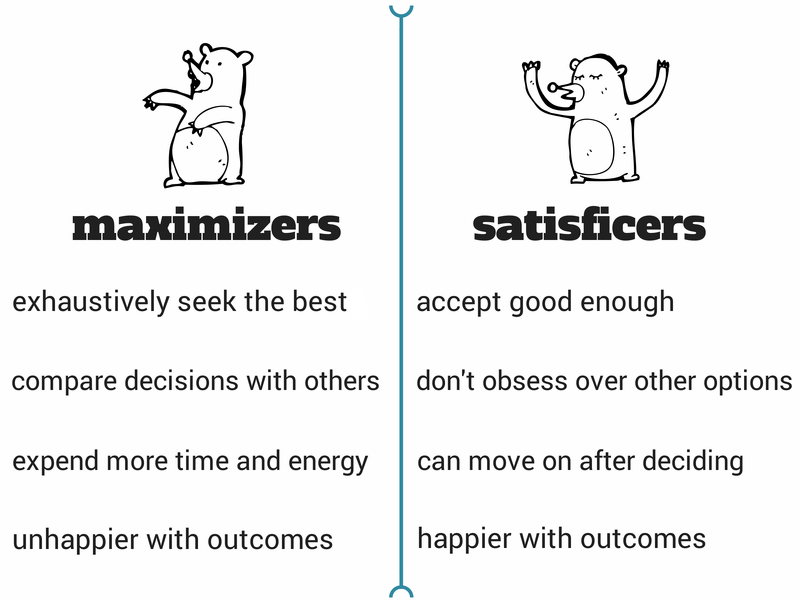












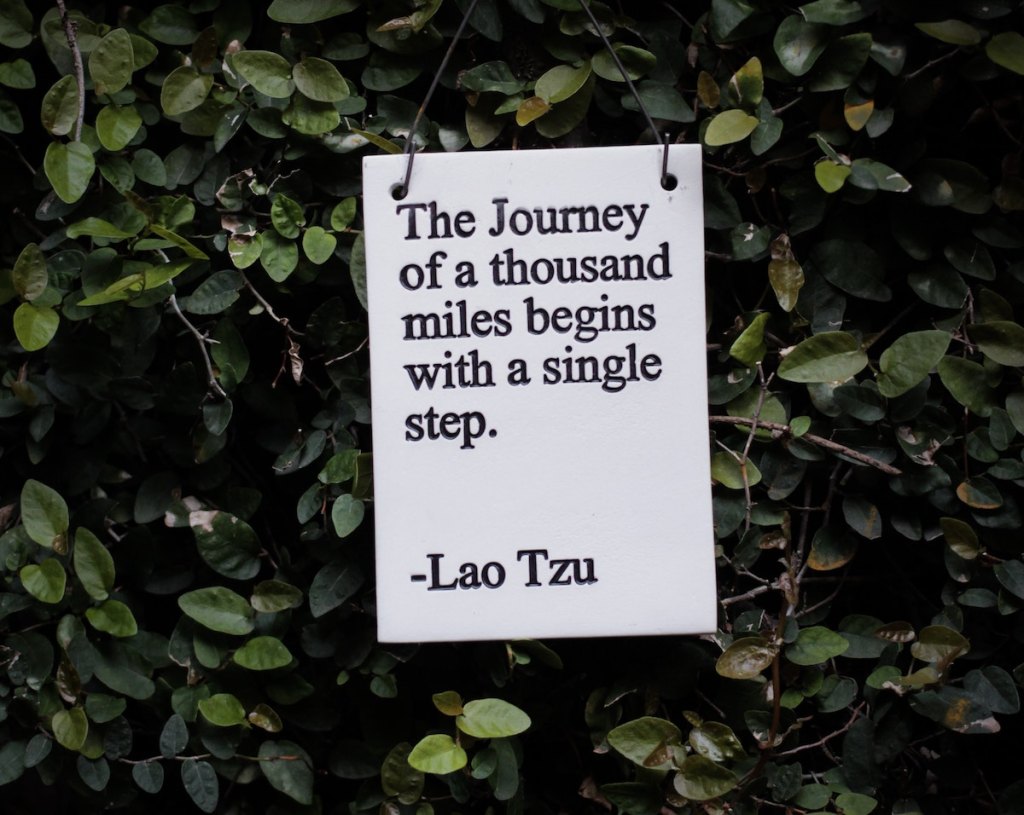
 Conscious Consumption