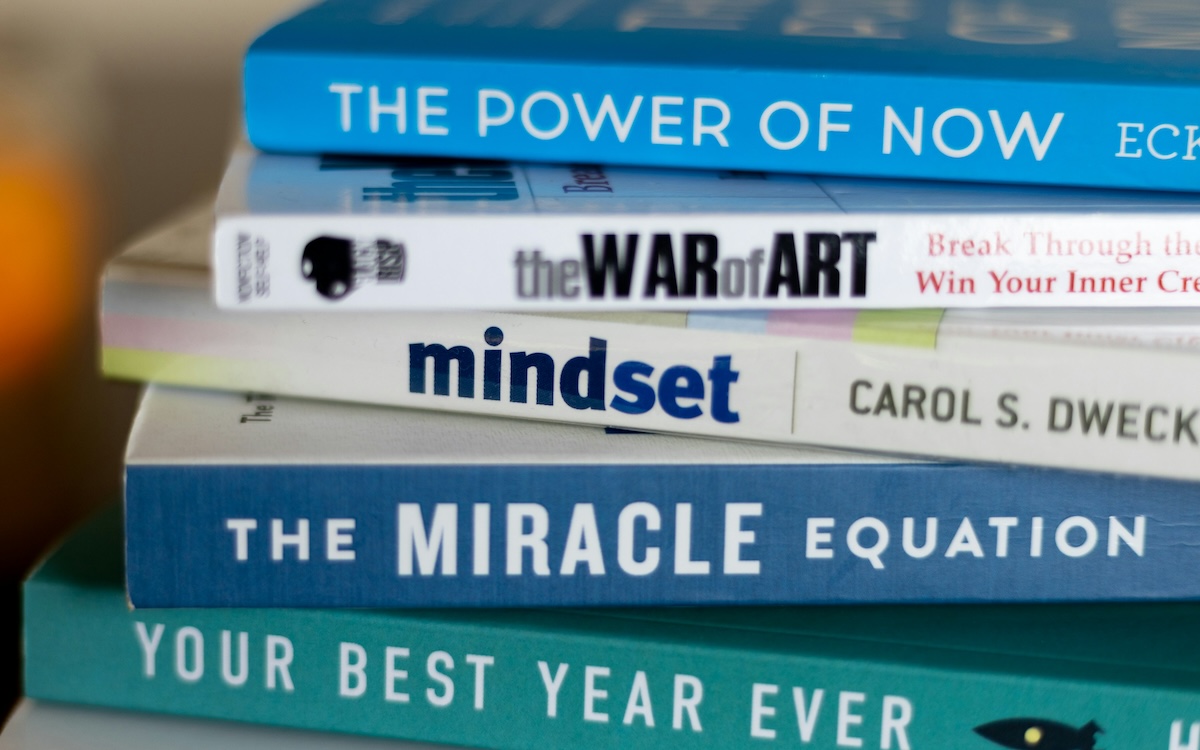
In this age of entrepreneurship, the productivity and motivational industry is a juggernaut. The global self-improvement market was valued at $43 billion in 2023, and is projected to reach $86.6 billion by 2032.
But many disciples of the personal development school of thought have a challenging time getting the principles and techniques they’re instructed on to stick.
Or at least I did, and I would assume I’m in the majority.
Each night, I would pen three ways in which I could have made the day better, along with several other prompts, á la Tim Ferris. But when I returned to that section of the journal several evenings later and found myself scribing the exact same measures I wish I’d have taken days or weeks earlier, I would become stricken with self-loathing.
I think it really just comes down to wants versus needs. Chasing all the things you think you need, but really only want on an ego level, will drive you insane… especially when you’re not moving any closer to them.
Likewise, it’s not self-improvement if you become worse off by depriving yourself of the things you enjoy. The goal is to do what brings you sheer glee, not what conventional wisdom says is “good for you.”
Doing things for the sake of the health benefits, attainment or improvement (the ego mind) is a way to ensure you struggle through life. Instead, try doing what you (the heart) want and listen to your intuition (needs of your gut) as a way to set constraints for yourself.
Distinguishing Between Egoistic Pursuits and the Heart’s Desires
“The only reason for playing music is to enjoy it. If you play music to impress an audience, to read about yourself in the newspaper, you’re not interested in music.”
Alan Watts
The more Watts I listened to, the more I realized all of my endeavors/actions were rooted in at least a hint of egotism—attainment in the form of appearance, status or financial gain.
My nutritional considerations and self-imposed dietary constraints (which I followed very loosely) were out of vanity as much as they were about health.
On some level, even petting the animals was a measure to ensure I would remain their favorite human in the household, instead of just giving love for love’s sake.
The highest virtue is not conscious of itself as virtue and therefore really is virtue. Lower virtue is so self-conscious that it’s not virtue.
Lao Tzu
My ego even found a way to creep into the one outlet I had which was initially built on a foundation of sheer enjoyment—DJing.
My fulfillment from this outlet always came from seeing others being moved by or resonating with the music I played. But when posting a mix online, I worried about using tracks I knew other DJs had used in a set because I wanted to craft mixes that were comprised entirely of obscure gems, or at least that contained fresh takes on the tunes that were widely-known—thereby getting recognition for being an esteemed music digger, while in reality, I discovered the vast majority of the tracks in my arsenal from others’ mixes on Soundcloud.
And besides, a track that moves people is a track that moves. To deny others from hearing it merely because of pride is textbook egotism.
Even when just listening to music alone, instead of being mindfully immersed and fully enjoying it, I would vividly envision playing it for friends and the recognition received for being the guy in the know.
Some of it was based in giving, sharing with others tunes that move my soul. But the larger driver – instead of the opportunity to resonate and connect with others – was acclaim.
Tapping Back Into Your Inner-North Star
It’s fairly easy to distinguish between ego-driven desires and the yearnings of your soul. In the case of urges of the heart – as long as you are on the path to realizing them – you experience little discontentment because it’s that process you find enjoyable.
In the very early innings, you may experience some discomfort from frustration with a lack of ability. But once you get to a certain level of proficiency, practicing the piano shouldn’t feel like a chore if it’s something that floods your being with light.
It’s always good to set milestones to quicken the development of your abilities, but your goal shouldn’t be to reach a certain level of acclaim or status. The “goal” should be to continue undertakings that fill you with joy—or at least with pride.
You also would be wise to ditch habits or objectives that continue to cause you psychological and physical tension (a topic I’ve already written a fair amount on) after you have made it through the initial learning curve turbulence.
The human body greatly benefits from stress, but only up to a point. Seek to exercise your body and mind in a way that doesn’t cause you dread in the hours leading up to the practice, and excessive mental strain while in the process.
The Three Hobby Approach
Investor and startup founder Naval Ravikant is often cited for his “three hobby” philosophy. He advises people to pick three pastimes—one that makes you money, one the makes you fit, and one that makes you more smarter/creative.
However, to my previous point, in order to have any real staying power or simply just offer much benefit, these must also be hobbies you enjoy.
There’s not much point in committing to read 30 minutes every night to boost your intellect if you retain minimal information because your mind was wandering the entire time. Likewise, taking up yoga won’t offer much benefit if you’re holding tension in various parts of your body during the poses (in fact, practicing could even be detrimental when done incorrectly in this way. See: Qi deficiency).
Any hobby you choose should be something that you can make a “meditation,” in which it’s easy be fully present to the activity and find one-pointed focus (i.e., the flow state).
After much practice, I’ve more or less gotten to the point where I can stay present to most activities, chores included. Surrendering my mind to the state of my body and how it’s interacting with the external environment are the most rehabilitating parts of my day.
Upon realizing this, I gave up my incessant need to multi-task (e.g., listening to a podcast while doing the dishes, Duolingo lessons while watching a football game), though that was extremely tough at first because of how many things my ego was telling me I needed to squeeze into a day.
Honestly, I feel more fulfilled after a day when I’ve put sustained, focus effort into a few crucial things than I do after one where I barely checked the boxes on a multitude of tasks, the outcome of which being little progress on any of them.
Finding Your Right Fit
Part of the reason I like my chosen past times for a meditation is because they all incorporate the body, the breath, or both.
Singing or playing the harmonica effectively requires awareness of both the breath and the body (throat, diaphragm). To hone your dance moves, you must relax the hips and just let it flow to the beat of the music—and you have much more endurance when able to breathe correctly.
Sadly, these are all things that won’t get me paid (laid, maybe) unless I were to become world-class at them. But I’m ok with that, because they’re all sources of healing. The improvement to mental wellbeing (contentment and self-esteem), cognitive function, and physical fitness they bring is enough for me to stick with them.
I think the way you know you’re really meant to do something is if you continue to pursue it, even if it doesn’t come with notoriety or financial gain. And especially so if you’re able to overlook frequent complications in your work/practice environment.
Just Do You, Boo
My advice is to just do what you love and keep a constant eye out for ways to monetize it. Using stabilized attention instead of intention, eventually something will pop up.
For those who haven’t the faintest idea of their reason for being, a good starting point is to just reflect on what you spend the most free time doing or thinking about, and don’t stress about it’s lack of profitability or potential for external validation.
The thing is, when you excel at something, there is generally a way to use it to bring value to others.
The hobbies I mentioned aren’t financial viable on their own. But the better I become at them, the more I can incorporate them into my DJ sets. And the more variety of skills I have, the more unique my brand of DJing becomes, which equates to less competition.
I mean, have you ever heard of a singing, dancing, harmonica and keyboard playing DJ?
Yeah, me neither.
I encourage you to start developing your own unique hobby set comprised of your deepest interests. You may be surprised at how quickly you progress when it’s things you have fun doing.
– CC
 Conscious Consumption